Saturday Lectures - IPKO Classroom - 31.08.24
Barabar Centre (Grand - 4th Floor)
Lecture: "Behind the veil:
Albania through isolation and transition"
- Barry Lewis
/ 31.08.2024 / 11:00 - 11:45 / Barabar Centre (Grand - 4th Floor)
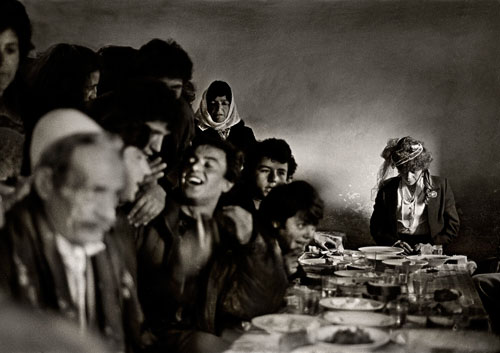
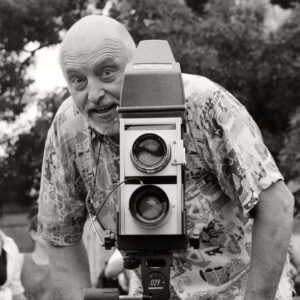
Photo: © Barry Lewis – Albania 1990
“Behind the veil:
Albania through isolation and transition” – Barry Lewis
“Oh, we’re back in the Balkans again, back to the joy and the pain. What if it burns or it blows or it snows? We’re back to the Balkans again. Back, where tomorrow the quick may be dead, With a hole in his heart or a ball in his head. Back, where the passions are rapid and red, Oh, we’re back to the Balkans again!”
Song of the Balkan Peninsula, Edith Durham, 1908
In the 1970’s, along with half of my generation, I believed that socialism was the way forward and made photographic journeys to the USSR, Cuba, East Germany and Romania. Strangely the country that exerted the strangest charm for me, without my having visited it, was Albania. Tales of a closed country, following an isolated Stalinist path of socialism, then turning its back on the Eastern bloc and embracing Maoism, was always fuelling my imagination. The hum and whistle of Radio Tirana with its flat monotonal commentary and its mix of martial and folk music triggered visions of a secret land behind mist-covered mountains. The excesses of the capitalist world vision epitomized by “Voice of America” had lost any allure for me, and a secretive country which banned beards, pornography, Americans, and idolised Norman Wisdom cried out to be visited.
In 1990 I joined a group of twelve people, made up of spies, tourists, journalists, a retired farmer, a botanist and a rock musician, on an “archaeological study tour”. Between us we had about four words of Albanian, a 1960’s phrase book and a lot of fear, especially as the timing of the visit followed hard on the heels of the fall of the Berlin wall and fighting had just started in Kosova. We were taken from co-op to commune, listened to traditional folk singers and as a grand finale visited the Enver Hoxha state tractor factory (devoid of tractors). Between the lines, however, we could see a country in its death throes. People whispered at night of demonstrations and unrest, asking endless questions about the West and… Norman Wisdom.
We were one of a few groups to visit Shkodra and made a limited trip to the north where, in the inaccessible mountains, a way of life had resisted forty years of repression. Here in these isolated heights, village and tribal life was based on the Kanun, a rigid set of codes from medieval times, based on honour and blood. My interest was whetted, fed by fantasy and reading Edith Durham’s accounts of living with the “Mountaineers” in her book, ‘High Albania’.
President Hoxha died in 1985 and in a wave of riots signalling the end of the one-party state, his statue was toppled on 21st February, 1991. I returned to the country with the writer Ian Thompson in March as the mountain snows melted and access to the northern mountains became possible. The area had been closed to foreigners for forty years as Hoxha’s party control had encountered real problems with the fiercely independent population of the region. The journey, this time, was better organised. It needed to be. The country was in a state of anarchy and navigating our way on the difficult roads, anger and crime were a constant reminder of life as it had been. We were lucky to be some of the first Westerners to meet the generous people of the highlands who took us into their homes and fed us despite severe shortages. People followed their law “Our house belongs to God and guest” and we were always under the host’s protection and given both food and gracious company. When we came upon the mournful funeral of a young man in the village of Kalimash, way up in the mountains, not only did they let a stranger photograph a painful and deeply personal ritual, but we were taken to the father’s house where gifts of food were thrust on us, with the words: “We are so sorry. It is our custom to place a roasted sheep on the table in front of guests. But we don’t have the means anymore.”
Europe was changing at an unprecedented pace, through technology and the free flow of people, this corner of the Balkans was moving from a closed society, full of dark secrets and fierce bravery on it’s difficult and journey towards a new beginning.
I hope this work honours these people.
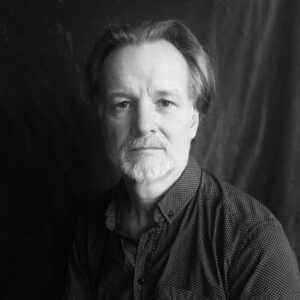
BARRY LEWIS
Barry Lewis started as a chemistry teacher with photography as a hobby. Barry stopped teaching in 1974 when he won a scholarship to the Royal College of Art where he studied under Bill Brandt. In 1976 he won the Vogue award and worked for a year with the magazine. In 1977 he received an arts council grant to photograph commuting in London, which was exhibited in the Museum of London and the Southbank. In 1981 & 83 he was exhibited in the Photographers Gallery, for ‘New Work on Britain’ and a solo show, ‘A Week in Moscow’ Working mainly for magazines, in 1999 he was a co-founder of the photo agency Network which played an important role in British Photojournalism for over 20 years. A regular contributor to Life Magazine, National Geographic, and the Sunday Times, Barry has worked globally until 2014 and made over 20 books. He has exhibited throughout the world and received several awards including the Leica medal for humanitarian photography. From 2015 for 5 years Barry worked mainly on documentary films but has returned to photography in 2021 when he started his current work, “Intersections”: a study of London through portraits and words of the people.
Lecture: "Eyewitness Testimony" (1989-2024) - Ron Haviv
/ 31.08.2024 / 12:00 - 12:45 / Barabar Centre (Grand - 4th Floor)

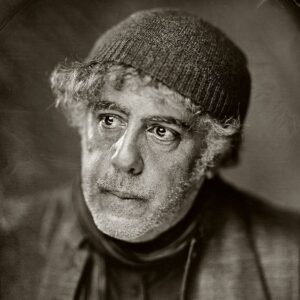
Photo: © Ron Haviv – Remains of Kolë Dushmani who was beheaded and burned during Kosova War 1999
Ron Haviv: They had taken a middle-aged man and a woman out of one of the houses. And the woman was screaming. And the soldiers were screaming. And they were screaming at me not to take photographs. And some shots rang out and the man fell to the ground. A few minutes later, they brought out another woman and they shot her as well. And, and then things sort of calmed down for a bit, and then they brought out two more people, and they said “Look, look, he’s from Kosovo. He’s a fundamentalist.” And he put his arms up and basically looked at me as if I was probably the only person that could save him, which, probably in his mind I was, but unfortunately there wasn’t really anything I could do. They brought him to the headquarters and as I was standing there, I heard a great crash and I looked up and out of a second floor window, this man came flying out and landed at my feet. And amazingly, he survived the fall and they came over and they doused him with some water. They said something like, “This is to purify Muslim extremists,” as they doused him in the water. And they started kicking him and beating him and then dragged him back into the home. I had to make sure there was a document that there had to be evidence of this crime, of what was happening. And that, I think, gave me the courage to try — to take those photographs. I was shaking, for sure, when I was doing it because I realized how precarious everything was, but I really thought it was unbelievably important to be able to have the world see what happened.
RON HAVIV
Ron Haviv is an Emmy-nominated filmmaker and an award-winning photojournalist. He co-founded VII Photo Agency and The VII Foundation, where he currently serves as a director. He is dedicated to documenting conflict and raising human rights issues around the globe.
Haviv’s first photography book, Blood and Honey: A Balkan War Journal, was called “One of the best non-fiction books of the year,” by The Los Angeles Times and “A chilling but vastly important record of a people’s suffering” by Newsweek. His other monographs are Afghanistan: The Road to Kabul, Haiti: 12 January 2010, The Lost Rolls and Shadow of Memory.
Haviv has produced an unflinching record of the injustices of war covering over twenty-five conflicts and his photography has had singular impact. His work in the Balkans, which spanned over a decade of conflict, was used as evidence to indict and convict war criminals at the international tribunal in The Hague. President George H.W Bush cited Haviv’s chilling photographs documenting paramilitary violence in Panama as one of the reasons for the 1989 American intervention.
His work is in the collections of The Getty, Eastman House and Museum of Fine Arts, Houston amongst others and has been seen in numerous other museums and galleries, including the Louvre, United Nations, Council on Foreign Relations, Fotografiska, and the International Center of Photography.
Haviv has co-created multi-platform projects for Doctors Without Borders’ DR Congo: The Forgotten War and Starved for Attention, Unicef’s Child Alert for Darfur and Sri Lanka and the International Committee of the Red Cross’s World at War. His commercial clients include Ad Council, American Express, BAE, Canon USA, ESPN, IBM and Volkswagen.
Haviv is the central character in six documentary films, including National Geographic Explorer’s Freelance in a World of Risk, in which he speaks about the dangers of combat photography, including his numerous detentions and close calls. He has provided expert analysis and commentary on ABC World News, BBC, CNN, NPR, MSNBC, NBC Nightly News, Good Morning America, and The Charlie Rose Show. He has written opinion pieces for the Washington Post and The New York Times and spoken at TEDx along with numerous other lectures at Universities and conferences.
He is currently co-directing two documentaries, Biography of a Photo and Picasso of Harlem.
Book promotion and lecture: "House For Sale" - Imre Szabó
/ 31.08.2024 / 13:00 - 13:45 / Barabar Centre (Grand 4th Floor)
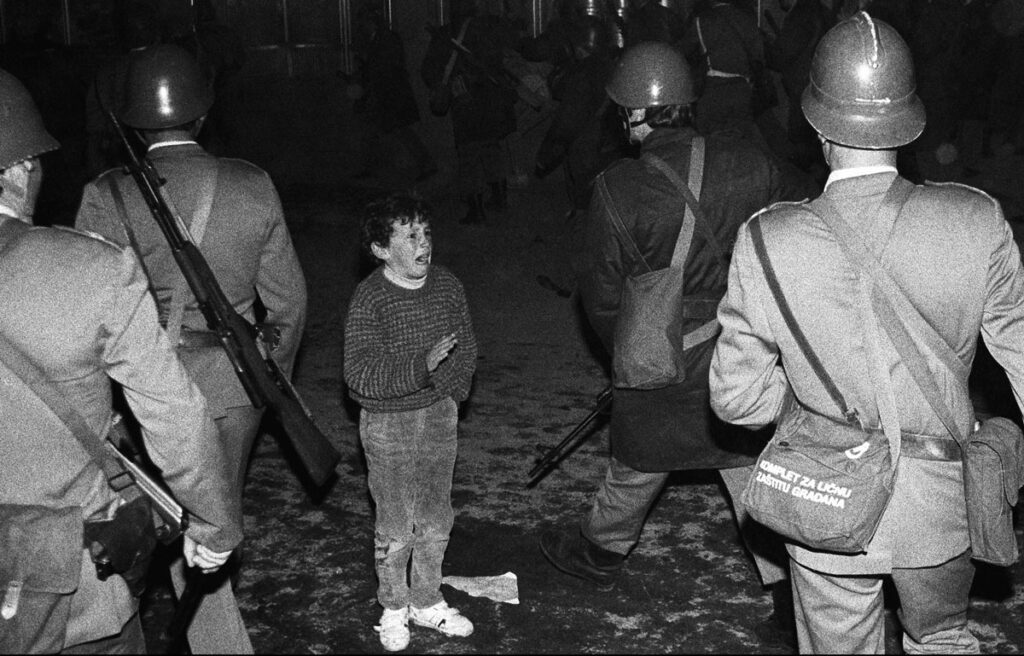
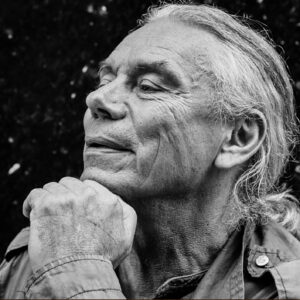
Photo: © Imre Szabo – Protests in Ferizaj 1989
“HOUSE FOR SALE” by Imre Szabó
“Kid, it’s a mess down there, but don’t just capture all the bad and broken stuff. Capture something we can use to illustrate texts.”
These were the words that Mirko Bojić, the then editor-in-chief of “Illustrated Politics,” used to see off Imre Szabo ahead of his first photographic assignment in Kosovo in 1981. He was probably unaware that, by sending him, he was doing an extremely significant thing for the creation of one of the most important photo archives of Kosovo from 1981 to 1999.
“When we published the photograph and the story House for Sale about how Serbs were selling their property and leaving Kosovo, I did not expect such reactions at all. We stumbled upon a grandmother completely by chance, sitting under a tree and peeling potatoes, and there was a sign “House for Sale” on the tree. After that, the same night, we visited Branko Đurica, then the deputy editor-in-chief, to tell him about that conversation. He immediately called the editor-in-chief and said we are changing the cover. This is how the photograph and the story ended up on the cover. It was all this strange to me. When the story came out, we were attacked from Serbia, being asked what we were doing and why we were stirring up the people.
“When Milošević went down there, I was convinced that he was really going to calm things down, that he had sincere intentions. However, when I attended those meetings and rallies, it became clear to me that nothing of that sort was happening.”
“Ever since I learned to speak Serbian, I haven’t had any problems based on nationality in Yugoslavia. This is why some things that awaited me in Kosovo were completely unimaginable from my perspective.”
Born in Mokrin, Serbia, in 1956, Imre completed high school in Kikinda and studied German Language and Literature at the Faculty of Philology, Belgrade University. He has been publishing photos since 1974 and has participated in over 200 exhibitions both domestically and internationally, earning numerous awards. His solo exhibitions have been held in Kikinda, Mokrin, Skopje, Belgrade, Banatski Brestovac, Ankara, Maribor, Paraćin, Kragujevac, Niš, and Istanbul.
He contributed to the “Light and Shadows on the Balkans” exhibition with 10 photos, displayed in Belgrade (2009), Bucharest (2010), Istanbul (2010), and Ankara (2010). He also participated in the “Lessons from ’91” project (2016 and 2017), which was exhibited in Zagreb, Belgrade, Berlin, and Maribor.
A professional photographer since 1980, Szabó began his career as a newspaper photographer at “Ilustrovana Politika” until 1989. He briefly worked at the daily newspaper “Politika” before moving to “Intervju” until autumn 1991 and then to “Nin” until 1995, after which he pursued applied photography independently. He has also served as a photography editor at the daily newspaper Danas, the weekly magazine Blic News, Novi magazin, Status monthly magazine, and for the news agency Fonet.
His work has been published in numerous significant international journals such as Stern, Focus, Spiegel, Mond, Lexpress, Time, Newsweek, Herald Tribune, and Le Nouvell Observateur, as well as in most Yugoslav newspapers and many monographs, catalogues, and publications.
He has been a member of ULUPUDS (Association of Serbian Applied Artists) since 1985 and is currently a freelance photographer based in Belgrade, Serbia.
"CONFLICT'S EFFECTS" - Elton Koritari - Art Curator
/ 31.08.2024 / 14:00 - 14:45 / Barabar Centre (Grand - 4th Floor)


Photo: © Armando Babani
An ‘imprisoned’ child from the flood, with a terrified look, behind the bars of a window; the artist Edi Rama hooded like a rebellious teenager in front of a plate stuffed with tomato pasta; Schumacher exhausted at the end of a race; The Monument of the former dictator falling violently into the crowd, thousands of ropes hanging from the edge of a ship where desperate people climb, they leave their own country. This is also the face of the photography of Armando Babani, or rather say, it has thousands of faces, faces that make up history, of the last four decades. We all grew up with his images, he has told all of us the truth about him in the course of years, cyclically, has always coincided with the truth of History. Multifaceted, unique, iconic, international photo reporter – published everywhere in the world – but also a photographer, the most important Albanian photojournalist, that never gets tired and carries on impersonating a critical observer and participant, contributes to give voice to those who could otherwise be ignored and stimulating reflection on complexity of our ever-changing world. As a photojournalist, published all over the world but even as an endaged artist, Armando Babani carry on a mission from almost 40 years, as he say it: “To only photograph the world, without altering the story”.
ELTON KORITARI
EJAlbum founder and administrator, project manager and curator of art and cultural events, specially focused on photography. Elton Koritari has been working in the Creative Industry for years, managing art projects, curating exhibitions, directing communication campaigns and also representing in Albania some of the most important brands in that sector. From Venice Biennale to Photography Festivals or everything else, he’s work is mainly focused on research about communities, social activism and visual education
"ARKA E MEMORIES" - Prof. Ardian Isufi and Prof. Lindar Muça
/ 31.08.2024 / 15:00 - 15:45 / Barabar Centre (Grand - 4th Floor)
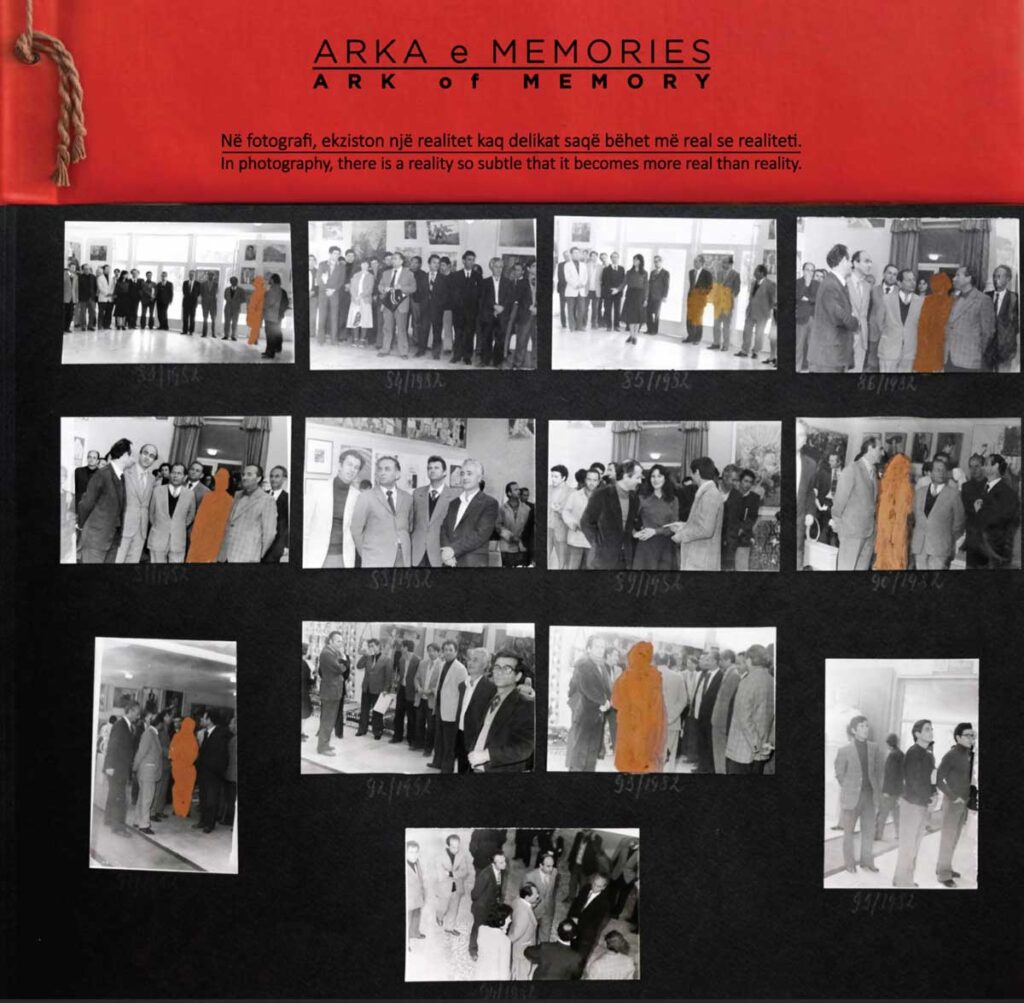

ARKA E MEMORIES – Prof. Ardian Isufi and Prof. Lindar Muça
…duke rrugëtuar nëpër koridoret e ngushta plot libra të Bibliotekës së Universitet të Arteve për të gjetur memuare të artit si zgjatim i hulummeve tona modeste, për të njohur dhe kuptuar më shumë nënshtresëzimet kulturore si antropologji njerëzore dhe fenomenologji kulturore, ngelëm të shtangur përballë një pirgu me albume të vjetra fotografike, ku shfletimi i tyre nga pluhuri kohëve të shkuara, të kaplonte menjëherë në gjurmët e arkivës pamore të Instutit të Lartë të Arteve (sot Universiteti i Arteve – UART).
“Në fotografi, ekziston një realitet kaq delikat saqë bëhet më real se realiteti” – Alfred Stiegliz
Çdo imazh flet sa për një mijë fjalë, çdo gjurmë drite në celuloid ka shënjuar përjetësisht jetën universitare në aq shumë ngjarje shkollore, me personazhe të profesoriatit, të studentësve, artistëve e të shumë të tjerëve të cilët kanë kontribuar në dekada për të krijuar elitat në edukimin dhe kulturën e Shqipërisë. Nga “Arka e Memories” dallohen qartazi edhe dritë-hijet e kohëve utopike që jetuam, ndërmjet frymës revolucionare dhe retushimeve historike!
Rreth Fakultetit të Arteve të Bukura dhe Bibliotekës së Universitetit të Arteve Tiranë:
Fakulteti i Arteve të Bukura (FAB) në Universiten e Arteve është instucioni më i rëndësishëm i formimit të arstëve profesionistë dhe pedagogjisë artistike në Shqipëri. I themeluar në vitin 1959 me një traditë akademike 65-vjeçare, FAB është i vetmi instucion i arsimit të lartë publik në fushën e arteve. Biblioteka e Universitet të Arteve është biblioteka më e madhe dhe më e vjetër e artit në Shqipëri. Ajo është një bibliotekë universitare që ndihmon në mënyrë të drejtpërdrejtë në formimin e artistëve të rinj.
Artist with a long career in the contemporary art scene, art critique continuously involved in organizing artistic activities and curating exhibitions. As an artist, he has participated in many national and international artistic activities in various countries such as Italy, Greece, France, Austria, China, United States etc., Where among others is worth mentioning; Tirana Biennale 2009, Venice Architecture Biennale in 2018 as an artist invited by the Albanian Pavilion, participant and winner of the third prize in 2005 and second prize in 1996 at the “Onufri Prize” the Albanian International Visual Arts Competition, etc. As a curator and art critic, his work is wide-ranging, the artist best represents the generation of Albanian artists and intellectuals actively engaged transversely all the spectrum of public action. In his work, Ardian Isufi has established a constant relationship with the Albanian public, as an artist or curator, always trying to confront public with acute social problems, always investigated from a contemporary and global point of view.
Sunday Lectures - IPKO Classroom - 01.09.24
Barabar Centre (Grand - 4th Floor)
Lecture: "Journeys through the USSR 1982-91, from Moscow and Leningrad to a journey Into the darkness of Stalin’s Siberian prison camps." - Barry Lewis / 01.09.2024 / 11:00 - 11:45 / Barabar Centre (Grand - 4th Floor)
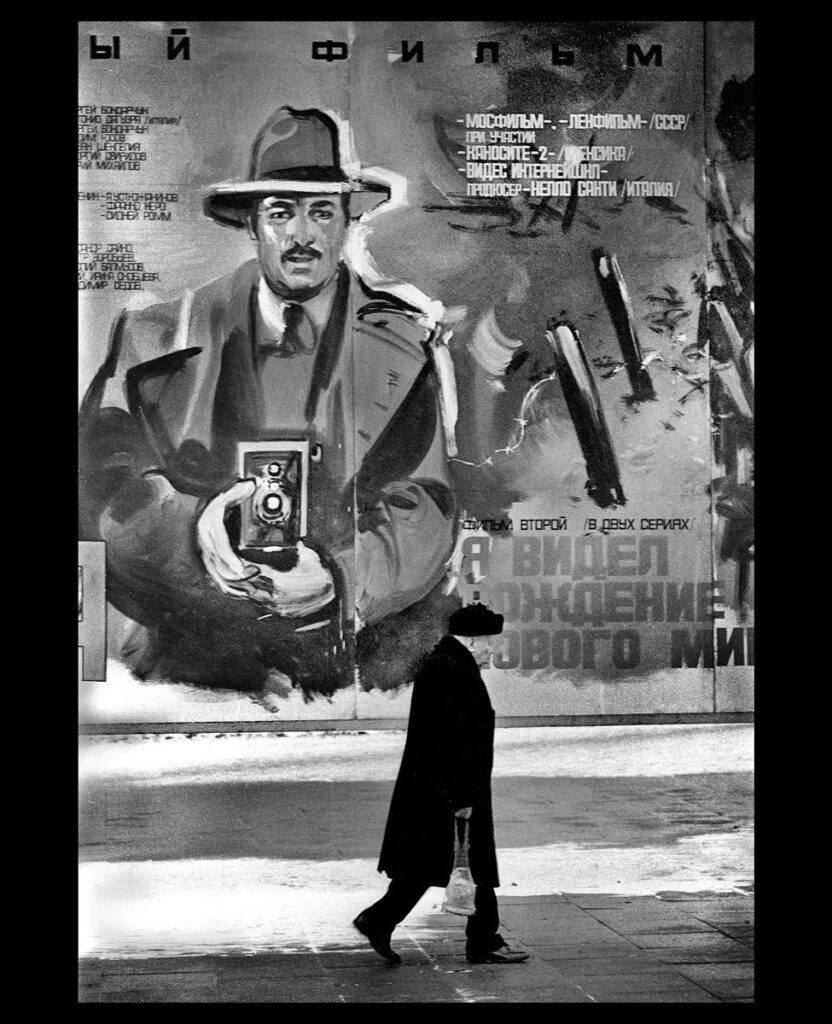
Photo: © Barry Lewis
“Journeys through the USSR 1982-91, from Moscow and Leningrad to a journey Into the the darkness of Stalin’s Siberian prison camps” – Barry Lewis
Moscow
I arrived alone in Moscow, December 1982, on a short but surreal visit after the USSR had experienced its worst economic performance since World War II. I went as part of a tourist group, speaking no Russian – I couldn’t even read Cyrillic script so I often didn’t know where I was. Nervous of what the trip would be like, my imagination having been fed by spy fiction, I was lucky enough to meet a couple of Australian Russian speakers who helped me daily. The arrivals lounge of the Soviet airport greeted me with the distinct and powerful smell of the ubiquitous cardboard-tipped Papirosy cigarettes. The weather and city were suitably grey during the few hours of winter daylight as we travelled to our hotel in the suburbs. I found the ‘otherness’ of the city compelling especially because the aesthetic of the USSR was dominated for me by the absence of consumer advertising. Instead, huge posters celebrated the towering intellects of Marx, Engels and Lenin; the victories of the Red Army plus the achievements of whichever five-year plan was in motion. On each floor of our hotel was the dezhurnaya, always female, who kept an eagle eye on all the guests, and was the person with the power to give you soap, toilet paper or a bath plug. Each day we had a fixed and obligatory programme, visiting museums, galleries and churches. I needed to avoid these trips in order to take everyday life pictures. Escaping from the compulsory organised trips led by our enthusiastic but controlling Intourist guide over the course of the nine days was tricky but successful: I was followed a lot but often never knew if my paranoia was real or imagined. I quickly developed a covert style of photographing with my camera tucked away under a voluminous sheepskin coat that also served to protect the camera from the sub-zero temperatures. I stayed mainly on the streets: there were few cafes to shelter in and people were curious rather than hostile but without any Russian our conversations were brief and limited. Though if ever I walked the street without a hat on, the babushkas would come up and slap my head to tell me I would die if I didn’t put it straight back on! Photographing in the USSR in the early 1980s was a tricky business. It was the height of the cold war: in October 1983, just five months after the death of Leonid Brezhnev, President Reagan was beating the American drum and denouncing Russia as the “Evil Empire”. Brezhnev was replaced by an ailing 69-year-old Yuri Andropov, who had manoeuvred his way to power through the support of the KGB and military in a Kremlin power struggle. Western photographers were not trusted and on my first visit, in 1982, to photograph Moscow, I often felt I was being followed. I was never certain whether my paranoia was real or imagined, though with twenty percent of the population employed by the military-industrial complex, it was best to assume the worst. Despite these Kremlin tensions, people on the street were getting on with life. New Year’s Day is their equivalent of Christmas and the shops, despite the limited goods available, were packed. As the bells rang out for the New Year in the middle of Red Square, the snow started falling, as if by magic. A man stepped forward playing an accordion and spontaneously the crowd started dancing and drinking the night away.
GULAG – A journey into the darkness of Stalin’s Siberian prison camps
“We have to squeeze everything out of a prisoner in the first three months – after that we don’t need him anymore.” Camp commander Naftaly Frenkel, The Gulag Archipelago
I was a founder member of Network Photographers and originally worked with Geo magazine on the story documenting Stalin’s Gulag, a Soviet network of forced labour camps. In the winter of 1991, during the openness of Gorbachev’s perestroika I travelled through Siberia with a writer for Geo Magazine, documenting Stalin’s Gulag, a Soviet network of forced labour camps. The camps housed a wide range of convicts, and often the final destination of political prisoners imprisoned, usually without a trial. 18 million people are reported to have been sent to the Gulag from 1930 to 1953 and over 1.5 million died there as a direct result of their detention. The journey followed the routes of the prisoners on the infamous Kolyma highway, known as the “road of bones”. The remote towns of the interior were bleak centres for the mining of gold and uranium, and many of the current population were descendants of the original prisoners, who had been forbidden to leave after completion of their sentence. During the journey, by paying the KGB, I stayed in Camp AW261/4, an active prison in Uptar. The hard labour was still brutal, with men working outside, pouring concrete, at temperatures of -30° C. My final destination, and the hardest to reach, was the abandoned settlement of Butugychag labour camp where gold and uranium had been mined until 1955. This secret settlement, not listed among the abandoned camps, was a chamber of horrors, surrounded by shallow graves. Finally, I travelled across Russia interviewing survivors through an organization called Memorial. Watching the unfolding of Putin’s invasion of Ukraine, and his rewriting of Soviet history, with critics sent to camps or simply murdered I felt my work had a special relevance during this dark period of Putin’s Russia echoing Stalin. I spent a lot of time talking to ‘Memorial’, a group of survivors dedicated to revealing facts about the Gulag – and was horrified when, in 2021, were outlawed as a ‘terrorist’ organization. When I started this journey, the internet did not exist. In the last 20 years it has been possible to discover so much more information which has enabled making this book, full of painful truths but essential for a perspective on current Russian realities.
BARRY LEWIS
Barry Lewis started as a chemistry teacher with photography as a hobby. Barry stopped teaching in 1974 when he won a scholarship to the Royal College of Art where he studied under Bill Brandt. In 1976 he won the Vogue award and worked for a year with the magazine. In 1977 he received an arts council grant to photograph commuting in London, which was exhibited in the Museum of London and the Southbank. In 1981 & 83 he was exhibited in the Photographers Gallery, for ‘New Work on Britain’ and a solo show, ‘A Week in Moscow’ Working mainly for magazines, in 1999 he was a co-founder of the photo agency Network which played an important role in British Photojournalism for over 20 years. A regular contributor to Life Magazine, National Geographic, and the Sunday Times, Barry has worked globally until 2014 and made over 20 books. He has exhibited throughout the world and received several awards including the Leica medal for humanitarian photography. From 2015 for 5 years Barry worked mainly on documentary films but has returned to photography in 2021 when he started his current work, “Intersections”: a study of London through portraits and words of the people.
"TESTIMONIES OF LIGHT: Photography, Bearing Witness and the Yugoslav Wars, 1988-2021" - Prof. Paul Lowe / 01.09.2024 / 12:00 - 12:45 / Barabar Centre (Grand 4th Floor)

Tuesday Lectures - IPKO Classroom - 03.09.24
Barabar Centre (Grand - 4th Floor)</h
Panel Discussion - "Shuttered Perspectives - Gender Equality and the Role of Female Photographers in the Global Landscape" / 03.09.2024 / 11:10 - 11:45 / Barabar Centre (Grand - 4th Floor) - Supported by OSCE Mission in Kosovo

© Diane Arbus
Panelists:
Yllka Fetahaj – University Professor of Photography
Diona Kusari – Cultural and Art Mediator
Mila Mihajlovic – Book Author and Feminist Advocate
Introduction:
“Shuttered Perspectives” is a panel discussion dedicated to exploring gender equality and issues within the realm of photography. In a field historically dominated by male voices and viewpoints, female have continually pushed boundaries, offering unique insights and challenging traditional narratives. This panel aims to provide a platform for insightful discussion, raise awareness, and promote inclusivity in the world of photography.
Discussion Overview:
Photography is a powerful medium that captures the essence of cultures, societies, and human experiences. However, the representation and recognition of women photographers have often been marginalized. This discussion will delve into the challenges and triumphs faced by women in photography, shedding light on their significant contributions to the art form.
By bringing together a diverse group of voices, “Shuttered Perspectives” aims to foster a deeper understanding of the gender dynamics within photography and highlight the invaluable contributions of female photographers. Through open dialogue and shared experiences, we hope to inspire future generations and contribute to a more equitable and inclusive world of photography